 by
Whilst an afternoon by the water can be a wonderful relaxed occasion, there's nothing worse than the sound of a reel in grind, or finding that you've lost hooks from your pocket, or that the only spare line you have is all brittle and going to break. Having a small amount of tackle to hand is no good if that tackle is of no use, and it will only be of no use if it has failed before you even got to the water. Look for potential failure points and build your kit around the conditions you expect to find, the length of your trip and the solutions that you can take with you.
Start with the water, weather and walking distance
Starting with the water, the weather and the amount of time and distance you will be traveling, you can then decide on the amount of tackle to take and what type of tackle you will need. This will help to form the basis of your tackle kit and prevent you from overloading your back with too much tackle.
Think about what could make your day's fishing out, be it weather, water quality, long walks across rough terrain or health problems. Wind could blow packaging and small tackle pieces; rain could soak packaging and paper items like spare clothing, tackle and bait instructions as well as your phone and small items like to Grayling Scale gauge, line measuring stick etc in open sided rucksack pockets.
Don't confuse slow with unpreparedness. Slipping on muddy or wet ground or having to walk a long way back to the car after a long day on the banks can cause harm. Suitable footwear, a means of communication and knowledge of local access rules, fishing seasons, permits and bait restrictions all must be researched prior to departure from home and confirmed with the relevant authority.
Use one container with visible priorities
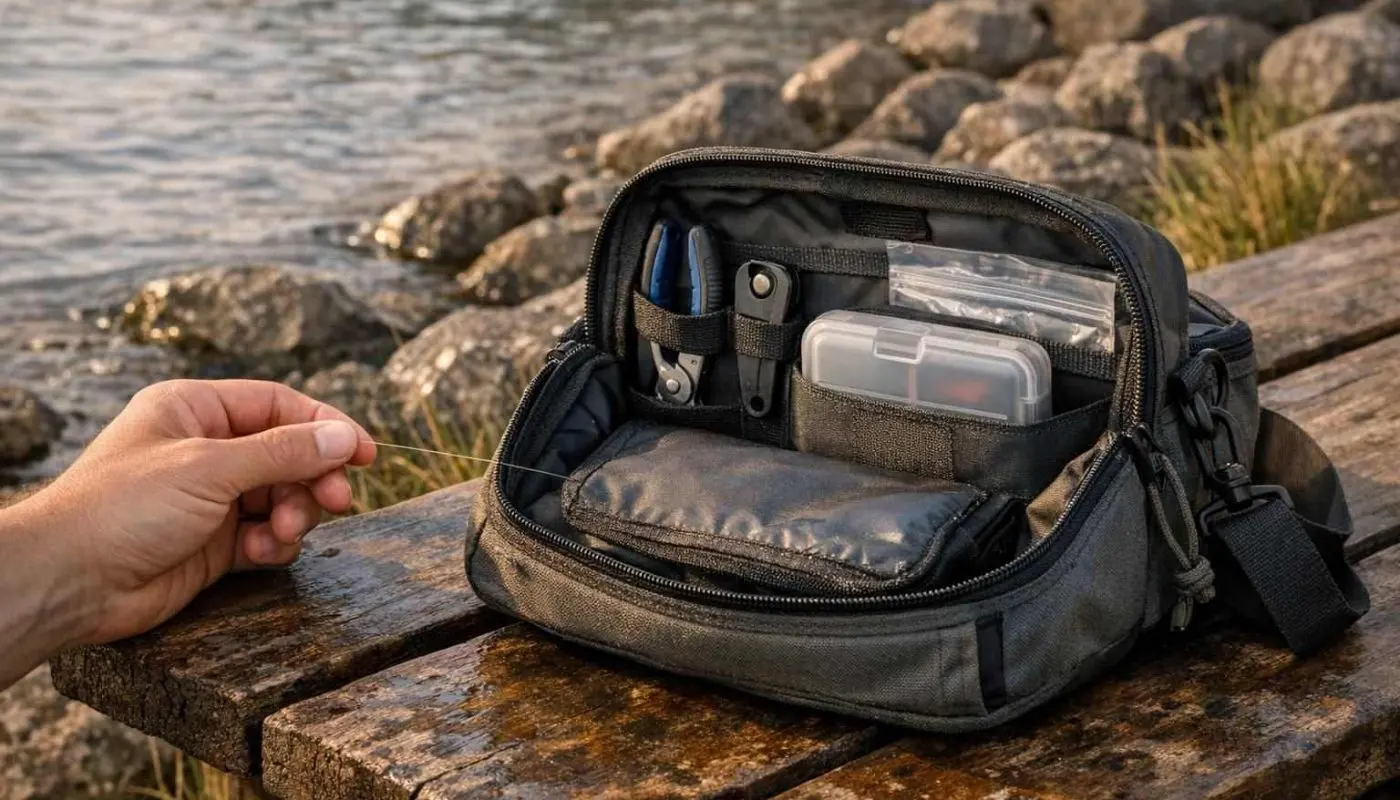
Rucksacks, waist packs and small day bags are best for very small amounts of tackle when all the items are needed for different things. Make sure the container is shut tightly before you go and will be able to withstand wet conditions. A brightly colored interior or the use of separate pouches within the bag will help locate items quickly in the dark when you are using one hand.
The items that you will most likely use should be at the top of your bag i.e. forceps or pliers, line cutters, a small towel for wiping etc., some spare leader, and the tackle you are intending to use for the method of fishing that you have chosen. Items of less use for that occasion should be at the bottom of the bag.
Can you take the main item out of the bag with one hand and use it immediately? I would suggest removing the bag from your shoulder and trying to find the essential items one by one. If you have to take the whole lot out of the bag to find the cutters then it has probably been packed in the wrong order.
Pack tackle for the actual method
Simple tackle is best when kept light. For fishing you will carry a number of hooks, swivels, weights and lures, all selected to best catch the species of fish you expect to catch, plus a supply of line or leader to replace a section that has broken. Sharp items should be carried in the smallest container possible to prevent them getting lost and causing damage to other items in your tackle bag. Hooks could be stored in a piece of foam, card or even a tackle holder, to prevent them getting tangled up with your line.
Inspect line for damage. Slightly run line between your fingers. Be aware of roughness, fading, thickening or hardening of the line. Throw away damaged parts before they could fail. Always check hooks for rust, for blunt points as well as for bent or corroded shanks. A single hook can cause a lot of harm – be sure to check them before you put them into your tackle box.
Limit the types of tackle maintenance tools you take. Perhaps a pair of nail clippers or a small line cutter such as scissors or a very small pair of line cutters. Some small pliers and a small blunt-ended tool (such as a dripping needle) to clear debris from hooks will cover most scenarios. If you are carrying bait then use a leak-resistant container and keep it away from your clothes, food etc. and other electronics.
Protect the items that fail quietly
Do not forget that water can get into your tackle bag. This often happens because of small things like salt, grit and sand which get into the reel, into your zip lock boxes containing lures, into your shoes etc. A waterproof bag is handy to carry a phone, keys, permission etc. In order to keep your cloths for wiping your hands etc. and packages containing old bait dry, it's wise to pack these in a separate bag.
So check for signs of potential problems before you go out. A snagging zipper, a cracked box hinge, a non-closing lid or even a rough feeling on the reel handle itself all indicate that you need to sort out the problem before you go out. At home you can easily get replacement parts for such items but at the water's edge they could mean that small items of tackle are lost in the water or get covered in mud and grit.
Remember a water resistant bag does not necessarily mean it can protect everything inside it. That usually depends on the fabric of the bag, whether all the zippers are closed and how it's going to be used. Store valuables like your phone and a copy of your permit in separate, internal, pouches and then pack a light layer such as a fleece or a change of socks in a further, sealed, pouch.
Add the small safety and comfort essentials
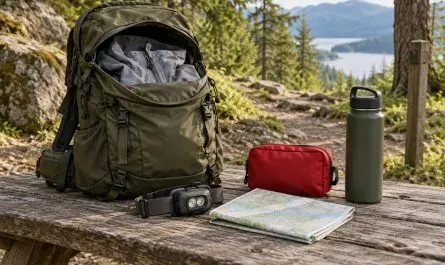
Some of your non-fishing kit will be useful for your trip. This might include water, snacks, sunscreen, and insect spray for example. A small first aid kit is also worth including as well as eye protection to prevent glare from the water, or in the worst case to protect your eyes from the occasional lure or hook that comes adrift.
Towels have many uses. Drying your hands is the most obvious. Also, a towel can be used to get a better grip on fish to land them more safely. Also, towel can be used to wipe dirt from your tackle. Add a headlamp to your fishing kit in case you are leaving the water very late. Make sure the batteries are working before you go, avoid using items that have been left in the water, deteriorating due to dampness. Make sure the eyelets are not corroded and that the switch still works.
Dispose of old line, packaging and used hooks in the pouch provided for this purpose in the bag. Discarded line can get caught up in water-dwelling animals and damage the bank on subsequent fishing outings. Follow local rules and regulations for disposal of fishing bait, fish and other waste whilst on the bank.
Finish with a quick reset after each trip
All equipment such as fishing lines, bait, etc. must be cleaned and dried at home before being put away in the bag. Wet line, old bait etc. must not be put in the main part of the bag and must be left to dry before being put away in the other compartments of the bag.
Inspect your shore-fishing gear before storing it for signs of deterioration and replace broken or worn items. It's equally important to pack the shore-fishing equipment you'll need for a specific method of fishing in a separate part of the day pack or rucksack. Weigh up the alternatives before packing additional tackle on a day's fishing.
It's easy to allow your fishing bag to become a constant and often increasing weight, storing all sorts of gear that could get lost or damaged, even thwart your whole fishing session. A good shore-fishing bag gives you room for more patience and allows you to focus on the reading of the water rather than dealing with problems that would have been prevented by organizing your basic fishing tackle properly.